Tuesday, 18 October 2016

The magic of Elizabeth Gilbert's Big Magic


Elizabeth Gilbert's Big Magic: the case for putting creative minds to work


Whether you loved it or loathed it, it was hard to avoid Elizabeth Gilbert's best-seller, Eat Pray Love, a few years back. I thought it was a great read - inspiring, well-written and elegantly structured - but for some reason I never got round to reading any of Gilbert's other books.

Until this week. I picked up Big Magic in the library and haven't been able to put it down. Sub-titled 'Creative Living Beyond Fear,' it might sound a little ponderous but isn't at all. In it Gilbert shares wisdom, wit and great insights into the creative process, shattering the myth that misery and creativity go hand in hand.

It's a light, easy read that is insightful, entertaining and at times made me laugh out loud. Divided into six sections (on Courage, Enchantment, Permission, Persistence, Trust and Divinity), there are tips and advice for us all in here. Yes, there's a wealth of understanding that creative types may find liberating, but there's also much that will appeal to anyone with a heartbeat.

It's hard to pick a favourite quote, but fellow dog lovers may enjoy this:
"Possessing a creative mind, after all, is something like having a border collie for a pet: It needs to work, or else it will cause you an outrageous amount of trouble."
Big Magic is definitely a book for makers and creators, but should also be required reading for anyone who has ever doubted their own ability, lacked the confidence to follow their dreams or simply cared too much what other people thought. Probably most of us then.

Have you read Big Magic? What did you think?  And do you have a favourite self-help book?


Wednesday, 26 November 2014

Three of the best: Blogs I could read all day

Twinkle: so not PC but I loved it anyway

I was addicted to magazines from an early age. I first got hooked on Twinkle, which my nana used to send me every week, moved on to Mandy, Jackie and Company and eventually succumbed to the hard stuff - Cosmo and Vogue.

I still subscribe to a couple and can't wait to flick through the glossy pages when they arrive, but these days you're far more likely to find me browsing a blog when I have a few minutes to spare. I follow quite a few and it was tough narrowing my favourites down to three, but these made the cut for one common reason - the way the personality of the blogger shines through their words:

Styling You: Nikki Parkinson's blog is, as the name suggests, devoted to helping women look and feel their best every day. There are fashion and beauty posts, tips on blogging and even occasional travel tips and ideas. My favourite thing about Nikki's blog is that she has created a real community here; most readers pop in regularly, she replies to almost every comment and is generous to a fault with her advice. If you like the blog and fancy a bit more Nikki, she published her first book Unlock your Style earlier this year.

Maggie Alderson's Style Notes: Maggie is a British author and journalist who has had her own love affair with Australia. I started reading her style columns in The Times when I still lived in the UK and was delighted to find her writing in Good Weekend when I moved to Sydney. The unusual thing about Maggie is that she writes about fashion, but can also be very funny. I still remember laughing so hard I snorted tea out through my nostrils when reading a column she'd written about the pitfalls of choosing a  brown bathrobe. Being mistaken for a monk for starters.

Savidge Reads: Simon Savidge is the man behind this blog and describes himself as 'the bookaholic with a beard.' He is indeed and is also a very amusing writer - his book reviews plus descriptions of life in the North of England are best enjoyed with a strong cup of tea and a custard cream. Savidge Reads also features interviews with authors and a regular series on Other People's Bookshelves (you can read about mine here). He has just been nominated for the UKBlogAwards and definitely gets my vote.

It seems as though every man and his dog has a blog these days - and that's just fine with me. I love that no matter how niche your interests, no matter how small your voice, blogging can connect you with like-minded people.

Just as I used to fall in love with new magazines when I was growing up (and Twinkle will always have a special place in my heart), I love to discover great new blogs. So if you have any recommendations to share, please do post them in the comments below.

Tuesday, 14 October 2014

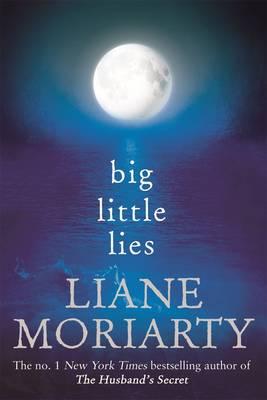
My favourite book of 2014: Liane Moriarty's Big Little Lies

My favourite book of 2014

When I unwrapped this book on my birthday, I smiled. I'd heard good things of Liane Moriarty and looked forward to discovering her writing for myself. Two months later and I'm still smiling. I LOVED this book. Let me tell you why:

1. It was like reading about my own life
What pulled me in to start with was reading about people, places and situations that felt so familiar it was almost spooky. The book begins and ends with a primary school trivia night that goes wrong. In between there are around 400 pages of daily life and domestic dramas, some are storms in teacups, but others are much much worse.

2. It's funny
Moriarty has a wicked sense of humour and doesn't miss a trick. She's ruthless in her assessment of playground politics, shows but doesn't tell and gives her cast of characters - many of whom are like a chorus, voicing their own opinions at the end of chapters - plenty of rope with which to hang themselves.

There's something to make you smile on so many pages. Opening the book at random I found this:

He turned off the bathroom light. They both went to opposite sides of the bed, snapped on their bedside lamps and pulled back the cover in a smooth, synchronised move that proved, depending on Madeline's mood, that they either had the perfect marriage or that they were stuck in a middle-class suburban rut and they needed to sell the house and go travelling around India.
'I'd quite like to give Jane a makeover,' mused Madeline as Ed found his page in his book. He was a big fan of Patricia Cornwell murder mysteries. 'The way she pulls back her hair like that. All flat on her head. She needs some volume.'
'Volume,' murmured Ed. 'Absolutely. That's what she needs. I was thinking the same thing.' He flipped a page.
3. It's beautifully written
To say there's a lot going on in this book is something of an understatement. But it's easy to read because Moriarty's prose just sparkles. Every word on the page earn its keep and the story has its own momentum - I couldn't put it down.

4. There's more to Big Little Lies than meets the eye.
You could be forgiven for thinking, at a quick glance, that the book is chick lit. Flicking through the pages you'll find the characters gossipping and bitching and falling in love too. But the story has a dark underbelly and Moriarty's exploration of domestic violence is one of the reasons the book has garnered so much attention.
'Mum! Come on!' Josh yanked on Celeste's arm. She clutched at her tender right shoulder. 'Ow!' For a moment the pain was so sharp she fought nausea.
'Are you all right?' said Renata.
'Celeste?' said Perry. She could see the shameful recognition in his eyes. He knew exactly why it had hurt so much. There would be an exquisite piece of jewellery in his bag when he returned from Vienna. Another piece for her collection. She would never wear it and he would never ask why.
For a moment Celeste couldn't speak. Big, blocky words filled her mouth. She imagined letting them spill out.
My husband hits me, Renata. Never on the face, of course. He's far too classy for that.
Does yours hit you?
And if he does, and this is the question that really interests me: Do you hit back?
'I'm fine,' she said. 
5. There's more where this one came from
There's nothing I like more than finding a new favourite author and discovering he or she has written lots of books. I'm going to track down Three Wishes and The Husband's Secret next. Also on my list are The Last Anniversary, What Alice Forgot and The Hypnotist's Love Story.

What's your favourite book of 2014? And have you discovered Liane Moriarty yet?


Saturday, 30 August 2014

Too close to home: Still Alice by Lisa Genova

Read it and weep: Lisa Genova's Still Alice
I ran into a girlfriend while walking our dog on Monday morning. Last time I saw my friend - three weeks ago - she told me that her mum, who suffered from Alzheimer's Disease, had just gone into care. I asked how her mum was doing and was shocked when she told me she had died.

I knew her mum wasn't well, I knew she wasn't going to get any better, but still I was appalled by the speed of her decline. What made me even sadder is that I know so many, too many, people whose lives are touched by this terrible illness.

I didn't know much about Alzheimer's until I read Lisa Genova's amazing debut novel, Still Alice. It's a first person account of an extraordinarily bright woman's descent into dementia: Alice Howland is a mother and brilliant Harvard professor in the prime of her life who initially notices she is becoming forgetful and is eventually diagnosed with early onset Alzheimer's.

Genova, an American neuroscientist, explores in painful detail what happens as the disease progresses and Alice's condition declines. It's been some years since I read this book, but I still remember reading about Alice getting lost in her own neighbourhood, believing she sees the floor of her house transformed into a gaping hole and being humiliated at work because she can't remember what she has or hasn't done or is supposed to do.

There are moments of great pathos. For example, Alice, once she knows what's happening to her, makes a pact with herself to end things once she has passed a certain point in her illness. She writes a note to herself in a special file on her computer, but by the time she finds and reads it again she is incapable of carrying out its instructions.

The book is as enlightening as it is unnerving - and I learned a lot from it as the scientific and medical aspects of the story are covered in a way that makes them easy to understand. The human pain - Alice's and her family's - is described unflinchingly too. Here is one of many memorable exchanges between Alice and her husband, John. She has asked him not to accept a great job offer in New York (they live in Boston) but to take a year's sabbatical and spend it with her:
"I don't think I can do it, Alice. I'm sorry, I just don't think I can take being home for a whole year, just sitting and watching what this disease is stealing from you. I can't take watching you not knowing how to get dressed and not knowing how to work the television. If I'm in lab, I don't have to watch you sticking Post-it notes on all the cabinets and doors. I can't just stay home and watch you get worse. It kills me."
"No, John, it's killing me, not you. I'm getting worse, whether you're at home looking at me or hiding in your lab. You're losing me. I'm losing me. But if you don't take next year off with me, well, then, we lost you first. I have Alzheimer's. What's your fucking excuse."
It's not all bleak though. Still Alice is also a warm and funny account of a high-achieving woman who loves her job and her family and is determined to make the most of the time she has left. I've just heard that the film of the book is due for release in 2015. Julianne Moore plays Alice with Alec Baldwin and Kristen Stewart in supporting roles. It'll be tough to watch, but I think it's a movie we all need to see.

In the meantime, if you haven't read it already, do pick up a copy of the book. September is Dementia Awareness month and given that 1,700 new cases of dementia are diagnosed each week in Australia and it's the third leading cause of death here, perhaps Still Alice should be required reading for us all.

I loved this book. Have you read it and what did you think?


Tuesday, 8 July 2014

Sweet reading: Zoe Foster's The Wrong Girl

A book for peanut butter lovers: Zoe Foster's The Wrong Girl
I'm a great believer that variety is good for us. That applies to food, exercise - and reading too. And call me a lightweight, but I don't think reading should feel like hard work. So while I love a thought-provoking book that lingers with me long after I've read the last word, sometimes something short and sweet can be just the ticket.

If you're feeling in the mood for a little reading confectionery, may I recommend Zoe Foster's The Wrong Girl? I picked up this book at the National Book Bloggers Forum a few weeks ago and decided to add it to my reading list as part of the Australian Women Writers Challenge.

I knew I was going to like this book as soon as I read the words:
"Dedicated to whoever it was who invented peanut butter. I - we all - thank you."  
On the cover it says the novel is about 'what happens when you discover the man of your dreams is going out with your best friend.' For me that undersells this book. Foster's story is the delightful and often amusing tale of young TV producer, Lily, struggling to find her way in life and love. It's well written and offers plenty of insights into what it's like to work in TV, particularly in food programming (lucky Lily finds daily banter with a gorgeous TV chef is part of her job description).

Of course, romance is on the menu and Lily eventually gets together with Jack Winters, the tasty young cook to whom her flatmate Simone, a swimwear model addicted to prescription drugs, is plainly unsuited. This element of the story is entertaining enough, but there's no real tension here. It's evident from the outset that Lily and Jack will soon be an item.

The book ends in traditional fashion with our hero and heroine about to kiss. I'm not sure what drew my eye to the next page, the acknowledgements, but I was glad it did. Foster has one last laugh in store for her readers:

"First of all, I must thank my dear friends Jamie Oliver and Curtis Stone, who spent hours, many hours, with me detailing how exactly chefs operate on a day-to-day basis, as well as the inner workings of live TV production. Second, I must retract those thanks, because I've never met either of those men. But I think they'd both definitely be very lovely and helpful."
The Wrong Girl is a fun read - a perfect refresher between heavier books. I'm reading Khaled Hosseini's And the Mountains Echoed now and loved it from the very first page. But next time I'm looking for something light, I might try Air Kisses, Foster's novel about 'the magazine world's most unlikely beauty editor'. How about you? Do you like to mix your reading up? What are your fave light reads?


Tuesday, 17 June 2014

Do we need an Australian Women Writers Challenge?


It's been said many times that writing is a solitary profession and I have to say I find that to be true. There are some days when I don't speak to anyone - except my dog - from 8am in the morning to 6pm at night. Most of the time I don't mind too much, but it can mean I have a lot of pent up talking to do.

And I'm not the only one. This year's inaugural National Book Bloggers Forum, hosted by publishers Random House, was full of booky bloggers just bursting with things to say about the books they'd read, the books they were going to read and, in some cases, the books they were going to write.

It was great to meet Shelleyrae Cusbert of Book'd Out who is surely one of the most prolific readers on the planet. Shelleyrae has four kids, but still makes time to read a book a day and blogs about most of them. I can only imagine she's mastered the art of reading while she sleeps.

Reader, writer and film reviewer Susan May of An Adventure in Words shared plenty of ideas too - including her cure for writers suffering from that common disease - 'life-gets-in-the-way-itis.' (In case you're a sufferer, the remedy is to: "write a page a day no matter what.")

Chatting to blogger Elizabeth Lhuede, I learned about the Australian Women Writers Challenge, an initiative that 'encourages avid readers and book bloggers, male and female, Australian and non-Australian, to read and review books by Australian women throughout the year.'

It's a challenge I find quite appealing, not least because it will help reduce the number of books on my 'to read' shelf for this year. Although I've never chosen a book because of the gender of its author, on balance I'd say that I prefer female writing. I generally don't find thrillers very thrilling and am drawn to books publishers categorise as quality commercial fiction - and they're often written by women.

Towards the end of the day, Random House previewed some of the books readers could look forward to for the second half of 2014. The list was long and included quite a few clearly destined to be bestsellers (more on this later). But when I was thinking about what to read next, I remembered my chat with Elizabeth.

Cute, funny and beautifully written: Zoe Foster's The Wrong Girl


I'm now reading Zoe Foster's The Wrong Girl (I'm not sure where Zoe was born, but understand she lives and is published here, so hope that counts) and on my 'to read' pile there's Sisters of Mercy and Matilda is Missing both by Caroline Overington, Elianne by Judy Nunn and Hades by Alexandra Adornetto. Have you read any of these and what did you think of them? Do you think we need an Australian Women Writers Challenge and who are your favourite Australian women writers? I'd love to hear what you think.


Friday, 16 May 2014

A book to devour: Caroline Overington's Ghost Child

Some books are there to be savoured, others are gobbled down in just a day or two. When I picked up Caroline Overington's Ghost Child, I had a feeling it would be one of the latter. I didn't know much about it, but I'd heard Overington's writing compared to that of Jodi Piccoult and expected a quality commercial read. In fact, Ghost Child exceeded my expectations.


Caroline Overington's Ghost Child: a delicious read


Overington's publishers, Random House, describe Ghost Child as 'a multi-voiced novel centred around a child's death and its terrible repercussions.' Here's their summary of the story:


"In 1982 Victorian police were called to a home on a housing estate an hour west of Melbourne. There, they found a five-year-old boy lying still and silent on the carpet. There were no obvious signs of trauma, but the child, Jacob, died the next day.  
The story made the headlines and hundreds attended the funeral. Few people were surprised when the boy's mother and her boyfriend went to prison for the crime. Police declared themselves satisfied with the result, saying there was no doubt that justice had been done.  
And yet, for years rumours swept the estate and clung like cobwebs to the long-vacant house: there had been a cover-up. The real perpetrator, at least according to local gossip, was the boy's six-year-old sister, Lauren. 
Twenty years on, Lauren has created a new life for herself, but details of Jacob's death begin to resurface and the story again makes the newspapers. As Lauren struggles with the ghosts of her childhood, it seems only a matter of time before the past catches up with her."

Ghost Child is an easy read, but it's a confronting one too. Overington tells the story through the mouths of a whole cast of characters, some major some minor, and so we have a glimpse of multiple perspectives as the story unfolds. She has a real talent for taking us inside someone else's head - and for conveying characterisation through little more than speech. Whether we love or loathe the people in this story, our feelings are usually inspired by their thoughts, their words...

By the same token, it's hard not to feel that the children in story have been failed by the state systems that are meant to care for and protect them, but at the same time we are led to understand how many of the system's failings have come about.

I picked up this book expecting a quick easy read. And it delivered on both fronts. But days later Ghost Child is still haunting me. This was the first book I've read by Caroline Overington, but it's left me wanting more.

What are you reading at the moment? And has it surprised you in anyway?


Sunday, 6 April 2014

How to get kids hooked on books: 6 tips for reluctant readers


A litte school holiday reading...
Kids today grow up in a world where so much competes for their attention - school, sports, friends, technology - that reading isn’t always at the top of the to-do list. Yet reading is so important; it helps develop imagination, emotional intelligence and language skills; can introduce us to people and places we might not otherwise encounter; and is a soothing and restorative end to a jam-packed day.

But what if your kids don’t want to read? Forcing them to do so rather defeats the point if you are trying to pass on the pleasure of reading. But there are ways of encouraging them to read more – without resorting to bribing or berating them. Here are my top tips for getting reluctant readers hooked on books:

Make it all about them
Allow them to choose their own book. Don’t be disappointed if they don’t fancy your suggestions; they’ll be far more likely to read if the book is about something that interests them. Some kids prefer non-fiction, particularly books full of facts about topics they’re interested in such as animals, science and so on.

Read together
Winter afternoons and evenings are the perfect time for curling up with a great read. School holidays can give you the time to do this together and may mean you have time to read a longer book than you might otherwise. Share a book by taking turns to read a chapter aloud or simply snuggle up together to read your own books.

Look for great kids’ series
Finding the right series can help get children hooked on reading. Classics like Mary Norton’s The Borrowers series or Laura Ingalls Wilder’s The Little House on the Prairie books are excellent choices. For something more contemporary look out for John Flanagan’s Ranger’s Apprentice or Derek Landy's Skulduggery Pleasant series.

Let them laugh
Most kids love reading comic-style books. Dav Pilkey’s Captain Underpants series, for example, has delighted millions of kids who might not otherwise have picked up a book. For me these books are a little like junk food; you wouldn’t them to be the only thing on the menu, but a little from time to time doesn’t do any harm. Hopefully these easy readers will be the first step to something a little more challenging.

Show them you love reading
Be a great role model by having plenty of books at home and letting your kids see you reading for work and pleasure. Chat about what you’re reading and why it interests you and ask them about their books too. Sometimes this will give you ideas for books you might enjoy together. R.J. Palacio’s Wonder  for example is a great book for kids and adults - I loved hearing my kids’ perspectives on the issues it raises. My younger son says Sharon M Draper's Out of My Mind (a story about a highly intelligent 10-year old girl who can't walk or talk) is excellent and I'm looking forward to discussing it with him once I've read it.

Highly recommended by my son: Out of my mind by Sharon M. Draper
Don’t stress
Family life is busy these days and even the most ardent readers can find it hard to make time for books. Don’t worry too much if your kids don’t have time to read every single day, just try and make it part of their routine when you can.

What do your kids like to read? Do you have more tips on encouraging reading? I'd love to hear them…


Monday, 17 March 2014

Chic lit: books for women who love fiction and fashion

Elegance by Kathleen Tessaro: Elle magazine describes it as 'an irresistible love story and self-help manual rolled into one.'

I rediscovered Elegance by Kathleen Tessaro while I was loitering in the local library the other day. I used to have this book, but think it was purged when we moved to Australia. It's chick-lit with a twist, weaving together classic style advice from another book (also called Elegance) by Genevieve Antoine Dariaux, and the story of Louise, a young woman whose marriage breaks up, but who eventually finds happiness in the arms of a much younger man. (Did I mention this was chick lit?)

It's well-written light reading, but for me Ms Dariaux' quotes steal the show. Here she is on the subject of yachting:
"Now is your chance to show everyone that you are not afraid to be seen without make-up, that you never leave a trail of disorder in your wake, that you have a wonderfully even disposition, and that your elegance is based on utter simplicity. If this be the case (and if you are not subject to seasickness and know how to swim), you will surely have the most wonderful time of your life." 
Beautifully put, Genevieve.

Elegance by 1960's style guru Genevieve Antoine Dariaux: where has my copy gone?

Now I'm reading The Seamstress by Maria Duenas. This is not such a light read; its elegant prose tells the story of a young dressmaker, Sira, from Madrid who leaves Spain with her lover in 1936 when the country is on the brink of civil war. They travel to Morocco where he betrays her and leaves her with huge debts. Civil war engulfs Spain. Sira cannot go back so she sets up her own salon and makes beautiful clothes for upper class expats and their German friends. WWII is looming and Sira becomes involved with the British Secret Service, a move that puts her in great danger.

I haven't finished The Seamstress yet, but am enjoying it very much. I love Duenas' writing - and her descriptions of Sira's sartorial creations, such as the time she has to whip up a faux Fortuny Delphos (evening dress) in a few hours, add to the allure of the book.

Fortuny Delphos: don't try this at home


I read Elegance in a twinkling, The Seamstress is taking me a little longer. If you love a good read - with a smidgeon of style advice on the side - I'd recommend them both. And I'd love to hear about any other great chic lit finds...

Sunday, 15 December 2013

Stepping outside my reading comfort zone: the Eclectic Reader Challenge 2014


I'd never thought of making a reading resolution before, but I'm planning to for 2014. This will be the year I step out of my reading comfort zone and discover the thrills of new genres including the medical thriller and cosy mystery fiction.

Don't ask me what those two are - I'd never even heard of them before today. But I know a woman who has. Shelleyrae Cusbert, who reads a book a day and blogs about her reading habit at Book'd Out, is hosting The Eclectic Reader Challenge (ERC) for 2014. The ERC invites participants to read up to 12 different books from 12 distinct categories by 31st December 2014.

You can read your selected titles in any order and at your own pace, but you must complete the challenge by the end of 2014.

Here are the categories:

1.  Award winning
2.  True crime (non-fiction)
3.  Romantic comedy
4.  Alternate history fiction
5.  Graphic novel
6.  Cosy mystery fiction
7.  Gothic fiction
8.  War/military fiction
9.  Anthology
10. Medical thriller fiction
11. Travel (non-fiction)
12. Published in 2014.

So that's my reading resolution for 2014. Fancy joining me? Head over to Book'd Out for more details - and do let me know how your reading year goes.

Saturday, 30 November 2013

What the paper said: the New Zealand Herald reviews Burned


This time three years ago, I was invited to represent Holidays with Kids magazine on a cruise aboard the Ms. Volendam. I spent eight days aboard the 61,214-ton luxury cruise ship and have to say I had a ball. The food was fantastic, the scenery spectacular (we cruised through the Milford Sound) and I loved that we were able to spot wildlife (dolphins, whales and albatross) as the ship went on its way. There were just a few journalists on that press trip and in between port visits, briefings from the captain and touring the kitchens, we could often be found sitting by the pool, playing Scrabble, chatting and working our way through the cocktail list. 

I also spent a fair few hours squirrelled away in my cabin editing the manuscript of my novel. Its working title was Snap, Crackle, Pop and I was delighted to have a few days away from business as usual in Sydney so I could work on it.

Fast forward three years and Snap, Crackle, Pop is now Burned. When I heard it would be published in New Zealand, I got in touch with Shandelle Battersby who works at the NZ Herald and was one of the other journalists on the Ms Volendam. I asked if she thought anyone at the paper would like to review it - she said she could do it herself.

I don't think it's appeared on-line yet, but this is what Shandelle wrote in her Chick Lit column:

"Noah, a boy who dreams of one day being an astronaut, is the central character in [Burned] this excellent debut novel by Persephone Nicholas, who dives back and forwards in time between England and Australia with the skill of someone who has been writing books for years.  
Noah and his mother Kate are rebuilding their lives after the death of Kate’s estranged husband when Noah gets caught up in a horrible crime that has far-reaching effects. To say any more would spoil the story, but I recommend this cracking read, which crosses several genres so should entertain almost everybody."

Fantastic review of Burned in The New Zealand Herald last month


If you'd like to read more from Shandelle, you can find her work here.

Saturday, 9 November 2013

New reads down under: 5 great Australian books

Dad and me in Canada, winter of '64

In a few weeks' time my dad will be flying to Sydney and coming to visit us for the first time. I couldn't be more excited. In between planning excursions, jotting down meal ideas and making up his room, I've also been thinking about books he might enjoy.

Growing up in the UK I didn’t come across a lot of Australian writing and I suspect my dad won't have either. So there's plenty to catch up on. When I arrived here nearly a decade ago, reading taught me about the history, heritage and culture of this beautiful land and I loved discovering new authors and fresh voices who showed me things I would never have discovered for myself.

I still have lots more reading to do. Great books are published faster than I can read them, but here are five I particularly enjoyed:

Breath by Tim Winton
It’s been a long time since I read it, but I still remember this story about a young boy, ‘Pikelet’ who lives near Perth and keeps dangerous company. This is a scary book for mothers of boys, but it’s also astutely observed, elegantly written and taught me a good deal about the perilous beauty of our waters.

The Road from Coorain by Jill Ker Conway
Reading Conway’s memoir dispelled any romantic fantasies I may have had about life on a rural property. She lived and worked on her family’s 32,000-acre sheep farm in the Australian outback until her father drowned when she was 11. Reading Conway’s descriptions of the impact of a three-year drought on the land, the animals and her family was an education in itself.

The Secret River by Kate Grenville
This Australian classic is a must-read for anyone wanting to know more about Australian history and its colonisation by the British. Grenville’s fictional account of an early 19th century Englishman, William Thornton, transported to Australia for theft, was inspired by her research into her ancestor Solomon Wiseman. It’s a gripping, confronting read that helps illuminate a dark topic.

Kate Grenville's The Secret River: a confronting read

Jasper Jones by Craig Silvey
Set in the fictitious regional mining town of Corrigan, Jasper Jones perfectly conveys the smouldering heat of a long Australian summer when there’s nothing much to do in the school holidays except play cricket, hang out with your mates – and discover the terrible secret behind a young girl’s death. As funny as it is dark, Jasper Jones is like a little time capsule; a 1960’s summer perfectly preserved for its readers.

The Light Between Oceans by M L Stedman
This book is set on a remote island, Janus Rock, off Western Australia in 1926. It's the story of Tom Sherbourne, a young lighthouse keeper and his wife Isabel who live a quiet life until a boat washes ashore carrying a dead man and a crying infant. I absolutely loved this book (read my review here) and urge you to read it for yourself immediately.

These are just five of my favourite Australian books. I know there are many more out there waiting to be discovered. I'd love to hear which ones you recommend...

Wednesday, 30 October 2013

Guest post: Who'd have thought I'd read this book: The Son by Philipp Meyer


Who'd have thought Jane Riley would read this book?

Today's post is by guest blogger Jane Riley. Jane is a freelance writer who also owns online design store, Who'd Have Thought? Take it away, Jane!

I heard Tim Winton speak recently, as part of the promotional tour for his new book, Eyrie. One of the comments he made struck me as the key to successful writing:

'Readers these days are bombarded by the now. You have to hook them immediately and make them want to not only sit down with your book, but stay with it to the very end. It is the immediacy of the writing, the skill of throwing the reader in the deep end that makes you want to keep on reading.'

So when I sat down with American novelist Philipp Meyer’s latest book, The Son, it was with an element of trepidation. Despite having read – and enjoyed - his first, highly applauded book, American Rust, I wasn’t sure if The Son would keep me page-turning because not everything about it appealed.

At 561 pages and the size of a brick it is the sort of book I would normally shun for something less hefty and, therefore, less time-consuming to read. Then there’s its premise: a violent cowboy and Indian family saga are words that describe books I usually never read. So why did I?

Meyer got me hooked on the first sentence:

‘It was prophesied I would live to see 100 and having achieved that age I see no reason to doubt it.’ It is the start of a multi-generational, multi viewpoint historical epic that spans from the Comanche raids of the mid-1800s to the oil boom of the 20th century. It transports you to the arid Texan plains back when the frontier was made from grit, spilt blood and a hell of a lot of tenacity. It was true survival of the fittest. And many didn’t.

I may have had to skim over several pages of brutal violence - ‘The only problem was keeping your scalp attached,’ says Eli at the end of chapter one – but I was swept along by the individual stories Meyer tells and the history he recreates so vividly and accurately from extensive research.

I was there when Eli loses his family and is kidnapped by the Comanches only to rise within their ranks. I was there when Jeanne fought against chauvinism and societal norms to head the family’s oil business. I was there when Peter rejects his father and runs away with a Mexican girl.

Like Winton, Meyer puts the reader in the heart of the action. He saddles you up and takes you along for the ride through 100 years of a part of American history you probably knew little about. Sometimes it’s a gallop, sometimes a canter, but never in nearly 600 pages do you ever trot, let alone stop.
It's a testament to Meyer’s writing skill that he can sustain us, the readers, in such a way for such a long time.

And you know what? I gobbled it all up – at times reading late into the night. So, I would like to rephrase the book’s premise and call it a rollicking good literary ride that takes you to a place you’re glad you can now only read about.

I didn’t want it to end. Who’d have thought?


Jane Riley is a Sydney-based freelance writer and owner of online design store,  Who'd Have Thought? which showcases unique gifts and homewares from around the world. The theme: creative reinventions and design innovations; the idea: to make you think, 'who'd have thought?' She also writes a blog which features interviews with artists and creatives and other quirky and interesting stuff going on in the world. 

Photograph of Jane Riley by Hannah Riley.

Monday, 14 October 2013

Ignorance vs. bliss: Would you want to know if your spouse had an affair?

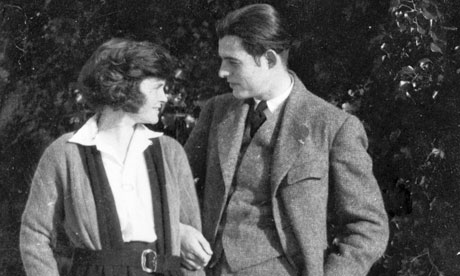
Hadley and Ernest Hemingway wed in September 1921
When I started thinking about packing for our holiday in Fiji last month, there were two items top of my packing list: a new swimsuit and a great read. It took a few hours to track down some swimmers I could bear to wear in public, but finding the perfect book took only a few seconds.

Paula McLain's The Paris Wife, the factional story of Ernest Hemingway's relationship with his first wife, Hadley Richardson, was already waiting for me on my bookshelves. A good friend gave me the book a while ago and I'd put it aside until I knew I would have a good chunk of time to devote to it.

I loved the book instantly. I don't know that much about Hemingway's work, but I didn't need to. The Paris Wife is a compelling tale of two young people navigating their way through marriage and life in post-war Paris. As a writer it was fascinating to read about the early years of Hemingway's career. Hadley describes his passion for writing brilliantly:
"His ambitions for his writing were fierce and all encompassing. He had writing the way other people had religion..."
It's widely known that Hemingway was a womaniser and eventually, like his father, brother and sister, committed suicide, but the early years of the marriage were happy. The Hemingways didn't have a lot of money compared to some of their peers, but still managed to spend a lot of time traveling around Europe rubbing shoulders with the literary glitterati of the time.

Hadley warns us in the prologue to: 'Keep watch for the girl who will come along and ruin everything.' And come along she does, insinuating herself into the lives of the Hemingways and eventually causing the break up of their marriage. It's frustrating and heartbreaking to see Hadley aware of what's happening and struggling to break free from the awful ménage a trois her marriage has become. As a reader, I wanted her to fight harder, but she explains why she can't:
"There are some who said I should have fought harder or longer than I did for my marriage, but in the end fighting for a love that was already gone felt like trying to live in the ruins of a lost city. I couldn't bear it and so I backed away..."
Reading The Paris Wife, it's easy to empathise with Hadley who knows her marriage is under threat, but isn't sure how to protect it. Nola Duncan, joint author with Libby Harkness of The Widow, faced a very different challenge. Happily married for 30 years, she thought her husband Michael was the perfect man - until clearing out his office on the anniversary of his death, she discovered 741 love letters between Michael and his lover, proof of his passionate six-year affair with a woman 23 years his junior.

 Nola Duncan's husband took his secret to the grave
It's hard to imagine how shocked and betrayed Nola must have felt. Her story asks many unanswered and perhaps unanswerable questions: why did he keep the letters? Can a man love two women at once? And how could Nola not have known?

I don't pretend to have any of the answers. But the question that is haunting me now is whose shoes I would prefer to walk in - Hadley's or Nola's? If your husband has an affair is it better to know or not?


Tuesday, 10 September 2013

A gift of a book: M L Stedman's The Light Between Oceans

The Light Between Oceans: a gift of a book

I was given The Light Between Oceans last February, but somehow didn't get around to reading it until August. What a treat I missed! I absolutely loved this book; it's a beautifully written, old-fashioned story but the dilemma at its heart is as agonising today as it would have been in April 1926, the starting point of the story.

The Light Between Oceans was published in 2012 and there is already a movie in the making. I guess I'm a little late to the party on this one. But, in case you haven't read it, here are the reasons I loved it and if you haven't done so already, please do.

1.  The simplicity of the story: A young lighthouse keeper, Tom Sherbourne, and his wife Isabel  live on a remote island known as Janus Rock off Western Australia. They yearn for children but Isabel suffers several miscarriages and the last, when she is seven months' pregnant, leaves her suicidal. Two weeks later a boat carrying a dead man and a crying baby washes ashore. Isabel sees the child as a gift from God and persuades Tom, against his better judgement, that they should keep the baby. The Light Between Oceans unravels the consequences of that decision and the paths Tom and Isabel's lives take, for better and for worse, after making it.

2.  Its classic qualities: Yes, I know that sex sells. And so do vampires, werewolves and zombies apparently. Personally I find it more than a little depressing that so many bestsellers are little more than the reading equivalent of junk food. The Light Between Oceans is more nourishing fare. I've described it as old-fashioned, but perhaps it would be more accurate to describe it as timeless. I'm sure I would have enjoyed it a decade ago and could reread it with pleasure in ten years' time. 

3.  M L Stedman's prose is a pleasure to read: There are many memorable passages in the book, but every sentence, every paragraph, every chapter is beautifully crafted. 
"He traced the constellations as they slid their way across the roof of the world from dusk till dawn. The precision of it, the quiet orderliness of the stars, gave him a sense of freedom. There was nothing he was going through that the stars had not seen before, somewhere, some time on this earth. Given enough time, their memory would close over his life like healing a wound. All would be forgotten, all suffering erased."
Read this book to find out what happens to the Sherbournes; to learn more about the art of story-telling; or simply for the love of fine writing, but please do read it - and let me know what you think.


Wednesday, 28 August 2013

September's must-read: Everything to Live For by Turia Pitt & Libby Harkness


Destined to be a best seller: Everything to Live For
A few months ago, before Burned was even in the bookshops, I was invited to talk at a meeting of freelance writers in Sydney. The meeting took place in Glebe, an area I don't know well, so I was delighted when another writer suggested we travel together.

Her name was Libby Harkness. As we traveled across this beautiful city by car, ferry and bus, we had plenty of time to talk. And talk we did. Libby told me about her life as a ghost writer; about the stories she had told and those yet to come. At the time she'd just finished working on Turia Pitt's story, Everything to Live For. Most people in Australia know Turia, if not by name then through the now iconic images of this former model wearing a mask. Here's her story in a nutshell:
"In September 2011, Turia Pitt, a beautiful 25-year-old mining engineer working her dream job in the far north of Western Australia, entered an ultra-marathon race that would change her life forever. Trapped by a fire in a gorge in the remote Kimberly region, Turia and five other competitors had nowhere to run. Turia escaped with catastrophic burns to 65 per cent of her body. Everything to Live For is the story of one young woman's survival against extraordinary odds, a testament to the human spirit."
Libby explained to me that writing Everything to Live For presented several challenges: "First, as a ghostwriter writing in the first person, I have to capture that person’s voice; but I didn’t know what Turia’s voice was like before she was burnt. The burns altered her mouth and the tight grafted skin on her face plus the black face mask she wore, all  affected the way she spoke. Second, she was still very fragile when I first started interviewing her and tired easily so it was difficult to push for more information; this related to the third difficulty – that she remembered very little after she was burnt and during the long wait for rescue. Then she spent weeks in an induced coma.

“I made a decision to limit her voice to two parts of the book – the four chapters in 'My Life Before' and four chapters in 'My Life After'. The rest of the book I wrote from my research into everything that had happened. I interviewed everyone I could that had been involved: other survivors, family, friends, her surgeons. I even flew over the Kimberley region in a helicopter with the pilot who had performed her heroic rescue and landed in the valley below the escarpment that the survivors had scaled when trying to escape the fire. I felt the outback heat and could only imagine how terrifying it must have been to be there in the face of the raging fire that day.

“By the time the book got to editing stage, Turia was much stronger and was able to add much more to her voice and describe her own feelings during her long rehabilitation. I have written many books but never one like this before. It was a challenging process and... ultimately very rewarding. And Turia loves the book.”

Libby Harkness says writing Turia Pitt's story was challenging but rewarding
The book isn't due to be published until 3rd September but is in the bookshops now and selling fast. Interest in it book has no doubt been fuelled by 60 Minutes; in last week's programme Turia took off her mask and revealed her face to the world.

After 16 surgeries and nearly two years of treatment, her medical bills have topped $2 million. Race organisers, Racing the Planet, have not contributed a cent to these costs and are still promoting marathon events in Asia, Africa and South America for 2014.

Turia's story is a terrible one. Nobody should have to go through the things she has. But if she is brave enough to share it, I think we should be brave enough to read it. What do you think?

Tuesday, 13 August 2013

Feel the fear and read it anyway: Bruce McCabe's Skinjob


Skinjob: a must-read for 2013?

I'm finding nothing more tiresome at the moment than coverage of next month's Federal election. So the other morning when my lovely husband brought me a cup of tea and the iPad so I could read the Sydney Morning Herald in bed, I quickly flicked past the front page.

It wasn't long before I happened across the entertainment section where I read about Bruce McCabe, author of new techno-thriller, Skinjob. McCabe has recently been discovered by Christopher Little (J. K. Rowling's former agent) and is poised for literary fame and fortune.

According to the SMH, McCabe's debut novel is one to watch. "Set in Silicon Valley, the futuristic techno-thriller follows a mass murder investigation by an FBI agent with a lie detector. The plot explores the future of technology, religion, politics and sexuality."

Reading the Herald's account of the book, I wasn't sure it would be one for me, but I was impressed by the fact that Little had emailed McCabe to ask if he could represent him.

Fast forward a few hours and I head over to Berkelouw Books in Balgowlah to celebrate National Bookshop Day. There are a few other authors there too, including - to my surprise - McCabe. At first I don't recognise him because he looks like a normal guy - nothing like the moody gun for hire in his publicity shots - but the copy of Skinjob under his arm gives him away and we chat for a while. I discover he's an innovation expert; advising governments and corporates on how technology will shape our futures. In short, I realise that Skinjob may be fiction, but a good deal of it is based on fact.

Bruce McCabe, author of Skinjob: normal guy or gun for hire?

Having spoken to McCabe I decide I must read the book. The first chapter is chilling (you can read it here) and I know I'm in for a hell of a ride. Skinjob is set to be the must-read thriller of 2013. Read it and decide for yourself.


Tuesday, 6 August 2013

A Girl Called Jack: recipes from the breadline:

Jack Monroe's new cook book: A Girl Called Jack will be published early in 2014

Once upon a time I used to read cook books for pleasure. Nigel Slater, Nigella Lawson, Hugh Fearnley-Whittingstall... I devoured their books and their recipes too. These days my cook books languish on their shelf - like most mums I spend a lot of time thinking about food, shopping for and preparing it, but I haven't bought a new cook book for at least five years. This week though, I'll be making an exception and pre-ordering Jack Monroe's A Girl Called Jack from Amazon. In case you haven't heard of her, Jack Monroe is, according to The Guardian, a '25 year old mum, prodigious blogger, austerity cook extraordinaire and breadline veteran.'

Her most famous blog post, Hunger Hurts written a year ago, describes her life at an all-time low - when she was unemployed, hungry and unable to feed her young son:
"This morning, small boy had one of the last Weetabix, mashed with water, with a glass of tap water to wash it down with. ‘Where’s Mummy's breakfast?’ he asks, big blue eyes and two year old concern. I tell him I’m not hungry, but the rumblings of my stomach call me a liar. But these are the things that we do."
Reading Monroe's blog about life in 'austerity Britain' brings tears to your eyes. The silver lining is her grit, determination and culinary creativity. Having determined to feed herself and her child on a budget of just £6 (around AU$10) per week, Monroe shares her 'Below The Line' budget recipes with her readers. Her recipes are a gift - who would complain about eating Brie and Bacon Risotto (26p per portion) or Creamy Salmon Pasta with a Chilli Lemon Kick (27p per portion). I don't think it would be possible to recreate Monroe's recipes quite so cheaply in Australia but they sound so good I'd be willing to give it a try.

A respected and talented blogger, Monroe has a job with her local newspaper now. Her book deal with Penguin is in the bag and things are definitely looking up. Her own life is in the ascendant, but Monroe
hasn't forgotten those who are still living below the line. She's an ambassador for Child Poverty Action Group, writing and raising money for Oxfam, and meeting with British Government advisers to tell them it's unacceptable that half a million people in the UK are relying on food handouts

Twelve months ago, Monroe says she 'was angry about my personal circumstances. Now I’m angry about everyone else’s.'

Most people's reaction on reading about Monroe will be ‘what can I do to help?’ Here's her answer:
"Donate something to your local food bank. Tins, nappies, baby formula, UHT milk, cereals, toiletries, pasta, rice, tinned fruit and vegetables… Volunteer at a children’s centre or a play group – I found the ‘free’ things to do with Small Boy were literally a lifeline to me when I had nothing to do in my day, no money, nothing to look forward to. Visit your local volunteer centre and see how you can help, someone, somewhere. Donate old clothes, shoes and blankets to your local homeless shelter. Don’t step over people in the street – give them the £3 you might have spent on a latte."
And if you have £12.99 to spare, why not buy her book?


Tuesday, 23 July 2013

The book that divided our book group: Close my Eyes by Sophie McKenzie

Sophie McKenzie's Close my Eyes: Did you love it or loathe it?
It was book group at my place this morning. On the menu: coffee, blueberry muffins and Sophie McKenzie's Close my Eyes. It's the story of a novelist who is struggling to cope with life after her baby was stillborn eight years ago and then hears out of the blue that her child didn't die, but was stolen. It's a gripping tale with plenty of action (but happily not much gore) and the plot keeps you guessing until the very last page. Reading a female-centric thriller is refreshing and the book's ending is truly chilling. I actually thought it was the best part of the book and would have started reading the sequel straight away if there was one. 

Most of the women in our group loved it. One of us just couldn't get into it and had given up - but she went away from the group thinking she would try again. 

What I liked less, and this is a common criticism of thrillers of course, is that I found the characters in the book two-dimensional and couldn't engage with any of them. I kept reading because I really wanted to know how the story panned out but, to be honest, I didn't really care about any of the people in the story - even the heroine. That surprised me because, as a writer and mother myself, I fully expected to empathise with her.

Having said that, if you like a good psychological thriller, I'd recommend this book. It's original, gripping while you're reading it and haunts you afterwards. Read it and see for yourself. I'd love to hear what you think...

Sunday, 7 July 2013

Walking on the (literary) dark side

A. M. Homes: is the truth darker than her fiction?

A. M. Homes prize-winning novel May We Be Forgiven is ‘breathtakingly dark’ according to Mark Brown, art correspondent for the The Guardian. I haven’t read it yet but, according to Brown, May We Be Forgiven: ‘has a devastating car crash, adultery and a murder within the space of the first 14 pages.’ Does that sound like too much? I, for one, don’t think so.

I’ve never been a fan of horror movies or thrillers. I don’t like to see blood spill or heads roll; I get frustrated with whodunnits because I’m more interested in the whydunnit. Yet I’m tempted to the dark side when reading – and writing – because books help us explore and interpret that darkness. Many great novels, Emma Donoghue’s Room or Lionel Shriver’s We Need to Talk about Kevin, for example, don’t just have a dark side, but were in fact inspired by heinous human deeds. We all know life can be cruel, so why wouldn’t we expect or want our literature to reflect that? These books have the potential to shine a light into the darkness and help us understand the incomprehensible. The best novels give us both light and shade, the light all the more lovely in contrast to the gloom.

My own novel Burned has been described as dark. To start with I was surprised, I thought I’d written a book celebrating the transforming power of parental love. Now, on reflection, I’m pleased to hear that adjective applied to my writing. Not so long ago I was browsing The Reading Chronicle online and read that someone had committed the very crime that lies at the heart of my book. So to anyone who says they aren’t comfortable with dark novels, I’d simply say: ‘don’t read them.’ But don’t kid yourself: the truth, if I may rephrase an old saying, is darker than fiction.