Sunday, 15 December 2013
Stepping outside my reading comfort zone: the Eclectic Reader Challenge 2014
I'd never thought of making a reading resolution before, but I'm planning to for 2014. This will be the year I step out of my reading comfort zone and discover the thrills of new genres including the medical thriller and cosy mystery fiction.
Don't ask me what those two are - I'd never even heard of them before today. But I know a woman who has. Shelleyrae Cusbert, who reads a book a day and blogs about her reading habit at Book'd Out, is hosting The Eclectic Reader Challenge (ERC) for 2014. The ERC invites participants to read up to 12 different books from 12 distinct categories by 31st December 2014.
You can read your selected titles in any order and at your own pace, but you must complete the challenge by the end of 2014.
Here are the categories:
1. Award winning
2. True crime (non-fiction)
3. Romantic comedy
4. Alternate history fiction
5. Graphic novel
6. Cosy mystery fiction
7. Gothic fiction
8. War/military fiction
9. Anthology
10. Medical thriller fiction
11. Travel (non-fiction)
12. Published in 2014.
So that's my reading resolution for 2014. Fancy joining me? Head over to Book'd Out for more details - and do let me know how your reading year goes.
Saturday, 30 November 2013
What the paper said: the New Zealand Herald reviews Burned
This time three years ago, I was invited to represent Holidays with Kids magazine on a cruise aboard the Ms. Volendam. I spent eight days aboard the 61,214-ton luxury cruise ship and have to say I had a ball. The food was fantastic, the scenery spectacular (we cruised through the Milford Sound) and I loved that we were able to spot wildlife (dolphins, whales and albatross) as the ship went on its way. There were just a few journalists on that press trip and in between port visits, briefings from the captain and touring the kitchens, we could often be found sitting by the pool, playing Scrabble, chatting and working our way through the cocktail list.
I also spent a fair few hours squirrelled away in my cabin editing the manuscript of my novel. Its working title was Snap, Crackle, Pop and I was delighted to have a few days away from business as usual in Sydney so I could work on it.
Fast forward three years and Snap, Crackle, Pop is now Burned. When I heard it would be published in New Zealand, I got in touch with Shandelle Battersby who works at the NZ Herald and was one of the other journalists on the Ms Volendam. I asked if she thought anyone at the paper would like to review it - she said she could do it herself.
I don't think it's appeared on-line yet, but this is what Shandelle wrote in her Chick Lit column:
"Noah, a boy who dreams of one day being an astronaut, is the central character in [Burned] this excellent debut novel by Persephone Nicholas, who dives back and forwards in time between England and Australia with the skill of someone who has been writing books for years.
Noah and his mother Kate are rebuilding their lives after the death of Kate’s estranged husband when Noah gets caught up in a horrible crime that has far-reaching effects. To say any more would spoil the story, but I recommend this cracking read, which crosses several genres so should entertain almost everybody."
![]() |
| Fantastic review of Burned in The New Zealand Herald last month |
If you'd like to read more from Shandelle, you can find her work here.
Saturday, 9 November 2013
New reads down under: 5 great Australian books
![]() |
| Dad and me in Canada, winter of '64 |
In a few weeks' time my dad will be flying to Sydney and coming to visit us for the first time. I couldn't be more excited. In between planning excursions, jotting down meal ideas and making up his room, I've also been thinking about books he might enjoy.
Growing up in the UK I didn’t come across a lot of Australian writing and I suspect my dad won't have either. So there's plenty to catch up on. When I arrived here nearly a decade ago, reading taught me about the history, heritage and culture of this beautiful land and I loved discovering new authors and fresh voices who showed me things I would never have discovered for myself.
I still have lots more reading to do. Great books are published faster than I can read them, but here are five I particularly enjoyed:
Breath by Tim Winton
It’s been a long time since I read it, but I still remember this story about a young boy, ‘Pikelet’ who lives near Perth and keeps dangerous company. This is a scary book for mothers of boys, but it’s also astutely observed, elegantly written and taught me a good deal about the perilous beauty of our waters.
The Road from Coorain by Jill Ker Conway
Reading Conway’s memoir dispelled any romantic fantasies I may have had about life on a rural property. She lived and worked on her family’s 32,000-acre sheep farm in the Australian outback until her father drowned when she was 11. Reading Conway’s descriptions of the impact of a three-year drought on the land, the animals and her family was an education in itself.
The Secret River by Kate Grenville
This Australian classic is a must-read for anyone wanting to know more about Australian history and its colonisation by the British. Grenville’s fictional account of an early 19th century Englishman, William Thornton, transported to Australia for theft, was inspired by her research into her ancestor Solomon Wiseman. It’s a gripping, confronting read that helps illuminate a dark topic.
![]() |
| Kate Grenville's The Secret River: a confronting read |
Jasper Jones by Craig Silvey
Set in the fictitious regional mining town of Corrigan, Jasper Jones perfectly conveys the smouldering heat of a long Australian summer when there’s nothing much to do in the school holidays except play cricket, hang out with your mates – and discover the terrible secret behind a young girl’s death. As funny as it is dark, Jasper Jones is like a little time capsule; a 1960’s summer perfectly preserved for its readers.
The Light Between Oceans by M L Stedman
This book is set on a remote island, Janus Rock, off Western Australia in 1926. It's the story of Tom Sherbourne, a young lighthouse keeper and his wife Isabel who live a quiet life until a boat washes ashore carrying a dead man and a crying infant. I absolutely loved this book (read my review here) and urge you to read it for yourself immediately.
These are just five of my favourite Australian books. I know there are many more out there waiting to be discovered. I'd love to hear which ones you recommend...
Wednesday, 30 October 2013
Guest post: Who'd have thought I'd read this book: The Son by Philipp Meyer
![]() |
| Who'd have thought Jane Riley would read this book? |
Today's post is by guest blogger Jane Riley. Jane is a freelance writer who also owns online design store, Who'd Have Thought? Take it away, Jane!
I heard Tim Winton speak recently, as part of the promotional tour for his new book, Eyrie. One of the comments he made struck me as the key to successful writing:
'Readers these days are bombarded by the now. You have to hook them immediately and make them want to not only sit down with your book, but stay with it to the very end. It is the immediacy of the writing, the skill of throwing the reader in the deep end that makes you want to keep on reading.'
So when I sat down with American novelist Philipp Meyer’s latest book, The Son, it was with an element of trepidation. Despite having read – and enjoyed - his first, highly applauded book, American Rust, I wasn’t sure if The Son would keep me page-turning because not everything about it appealed.
At 561 pages and the size of a brick it is the sort of book I would normally shun for something less hefty and, therefore, less time-consuming to read. Then there’s its premise: a violent cowboy and Indian family saga are words that describe books I usually never read. So why did I?
Meyer got me hooked on the first sentence:
‘It was prophesied I would live to see 100 and having achieved that age I see no reason to doubt it.’ It is the start of a multi-generational, multi viewpoint historical epic that spans from the Comanche raids of the mid-1800s to the oil boom of the 20th century. It transports you to the arid Texan plains back when the frontier was made from grit, spilt blood and a hell of a lot of tenacity. It was true survival of the fittest. And many didn’t.
I may have had to skim over several pages of brutal violence - ‘The only problem was keeping your scalp attached,’ says Eli at the end of chapter one – but I was swept along by the individual stories Meyer tells and the history he recreates so vividly and accurately from extensive research.
I was there when Eli loses his family and is kidnapped by the Comanches only to rise within their ranks. I was there when Jeanne fought against chauvinism and societal norms to head the family’s oil business. I was there when Peter rejects his father and runs away with a Mexican girl.
Like Winton, Meyer puts the reader in the heart of the action. He saddles you up and takes you along for the ride through 100 years of a part of American history you probably knew little about. Sometimes it’s a gallop, sometimes a canter, but never in nearly 600 pages do you ever trot, let alone stop.
It's a testament to Meyer’s writing skill that he can sustain us, the readers, in such a way for such a long time.
And you know what? I gobbled it all up – at times reading late into the night. So, I would like to rephrase the book’s premise and call it a rollicking good literary ride that takes you to a place you’re glad you can now only read about.
I didn’t want it to end. Who’d have thought?
Jane Riley is a Sydney-based freelance writer and owner of online design store, Who'd Have Thought? which showcases unique gifts and homewares from around the world. The theme: creative reinventions and design innovations; the idea: to make you think, 'who'd have thought?' She also writes a blog which features interviews with artists and creatives and other quirky and interesting stuff going on in the world.
Photograph of Jane Riley by Hannah Riley.
Monday, 14 October 2013
Ignorance vs. bliss: Would you want to know if your spouse had an affair?
![]() |
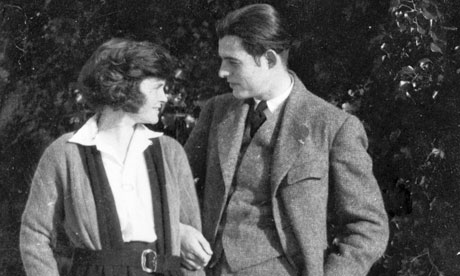
| Hadley and Ernest Hemingway wed in September 1921 |
Paula McLain's The Paris Wife, the factional story of Ernest Hemingway's relationship with his first wife, Hadley Richardson, was already waiting for me on my bookshelves. A good friend gave me the book a while ago and I'd put it aside until I knew I would have a good chunk of time to devote to it.
I loved the book instantly. I don't know that much about Hemingway's work, but I didn't need to. The Paris Wife is a compelling tale of two young people navigating their way through marriage and life in post-war Paris. As a writer it was fascinating to read about the early years of Hemingway's career. Hadley describes his passion for writing brilliantly:
"His ambitions for his writing were fierce and all encompassing. He had writing the way other people had religion..."It's widely known that Hemingway was a womaniser and eventually, like his father, brother and sister, committed suicide, but the early years of the marriage were happy. The Hemingways didn't have a lot of money compared to some of their peers, but still managed to spend a lot of time traveling around Europe rubbing shoulders with the literary glitterati of the time.
Hadley warns us in the prologue to: 'Keep watch for the girl who will come along and ruin everything.' And come along she does, insinuating herself into the lives of the Hemingways and eventually causing the break up of their marriage. It's frustrating and heartbreaking to see Hadley aware of what's happening and struggling to break free from the awful ménage a trois her marriage has become. As a reader, I wanted her to fight harder, but she explains why she can't:
"There are some who said I should have fought harder or longer than I did for my marriage, but in the end fighting for a love that was already gone felt like trying to live in the ruins of a lost city. I couldn't bear it and so I backed away..."Reading The Paris Wife, it's easy to empathise with Hadley who knows her marriage is under threat, but isn't sure how to protect it. Nola Duncan, joint author with Libby Harkness of The Widow, faced a very different challenge. Happily married for 30 years, she thought her husband Michael was the perfect man - until clearing out his office on the anniversary of his death, she discovered 741 love letters between Michael and his lover, proof of his passionate six-year affair with a woman 23 years his junior.
![]() |
| Nola Duncan's husband took his secret to the grave |
I don't pretend to have any of the answers. But the question that is haunting me now is whose shoes I would prefer to walk in - Hadley's or Nola's? If your husband has an affair is it better to know or not?
Tuesday, 10 September 2013
A gift of a book: M L Stedman's The Light Between Oceans
![]() |
| The Light Between Oceans: a gift of a book |
I was given The Light Between Oceans last February, but somehow didn't get around to reading it until August. What a treat I missed! I absolutely loved this book; it's a beautifully written, old-fashioned story but the dilemma at its heart is as agonising today as it would have been in April 1926, the starting point of the story.
The Light Between Oceans was published in 2012 and there is already a movie in the making. I guess I'm a little late to the party on this one. But, in case you haven't read it, here are the reasons I loved it and if you haven't done so already, please do.
1. The simplicity of the story: A young lighthouse keeper, Tom Sherbourne, and his wife Isabel live on a remote island known as Janus Rock off Western Australia. They yearn for children but Isabel suffers several miscarriages and the last, when she is seven months' pregnant, leaves her suicidal. Two weeks later a boat carrying a dead man and a crying baby washes ashore. Isabel sees the child as a gift from God and persuades Tom, against his better judgement, that they should keep the baby. The Light Between Oceans unravels the consequences of that decision and the paths Tom and Isabel's lives take, for better and for worse, after making it.
2. Its classic qualities: Yes, I know that sex sells. And so do vampires, werewolves and zombies apparently. Personally I find it more than a little depressing that so many bestsellers are little more than the reading equivalent of junk food. The Light Between Oceans is more nourishing fare. I've described it as old-fashioned, but perhaps it would be more accurate to describe it as timeless. I'm sure I would have enjoyed it a decade ago and could reread it with pleasure in ten years' time.
3. M L Stedman's prose is a pleasure to read: There are many memorable passages in the book, but every sentence, every paragraph, every chapter is beautifully crafted.
"He traced the constellations as they slid their way across the roof of the world from dusk till dawn. The precision of it, the quiet orderliness of the stars, gave him a sense of freedom. There was nothing he was going through that the stars had not seen before, somewhere, some time on this earth. Given enough time, their memory would close over his life like healing a wound. All would be forgotten, all suffering erased."Read this book to find out what happens to the Sherbournes; to learn more about the art of story-telling; or simply for the love of fine writing, but please do read it - and let me know what you think.
Wednesday, 28 August 2013
September's must-read: Everything to Live For by Turia Pitt & Libby Harkness
| Destined to be a best seller: Everything to Live For |
A few months ago, before Burned was even in the bookshops, I was invited to talk at a meeting of freelance writers in Sydney. The meeting took place in Glebe, an area I don't know well, so I was delighted when another writer suggested we travel together.
Her name was Libby Harkness. As we traveled across this beautiful city by car, ferry and bus, we had plenty of time to talk. And talk we did. Libby told me about her life as a ghost writer; about the stories she had told and those yet to come. At the time she'd just finished working on Turia Pitt's story, Everything to Live For. Most people in Australia know Turia, if not by name then through the now iconic images of this former model wearing a mask. Here's her story in a nutshell:
"In September 2011, Turia Pitt, a beautiful 25-year-old mining engineer working her dream job in the far north of Western Australia, entered an ultra-marathon race that would change her life forever. Trapped by a fire in a gorge in the remote Kimberly region, Turia and five other competitors had nowhere to run. Turia escaped with catastrophic burns to 65 per cent of her body. Everything to Live For is the story of one young woman's survival against extraordinary odds, a testament to the human spirit."Libby explained to me that writing Everything to Live For presented several challenges: "First, as a ghostwriter writing in the first person, I have to capture that person’s voice; but I didn’t know what Turia’s voice was like before she was burnt. The burns altered her mouth and the tight grafted skin on her face plus the black face mask she wore, all affected the way she spoke. Second, she was still very fragile when I first started interviewing her and tired easily so it was difficult to push for more information; this related to the third difficulty – that she remembered very little after she was burnt and during the long wait for rescue. Then she spent weeks in an induced coma.
“I made a decision to limit her voice to two parts of the book – the four chapters in 'My Life Before' and four chapters in 'My Life After'. The rest of the book I wrote from my research into everything that had happened. I interviewed everyone I could that had been involved: other survivors, family, friends, her surgeons. I even flew over the Kimberley region in a helicopter with the pilot who had performed her heroic rescue and landed in the valley below the escarpment that the survivors had scaled when trying to escape the fire. I felt the outback heat and could only imagine how terrifying it must have been to be there in the face of the raging fire that day.
“By the time the book got to editing stage, Turia was much stronger and was able to add much more to her voice and describe her own feelings during her long rehabilitation. I have written many books but never one like this before. It was a challenging process and... ultimately very rewarding. And Turia loves the book.”
![]() |
| Libby Harkness says writing Turia Pitt's story was challenging but rewarding |
After 16 surgeries and nearly two years of treatment, her medical bills have topped $2 million. Race organisers, Racing the Planet, have not contributed a cent to these costs and are still promoting marathon events in Asia, Africa and South America for 2014.
Turia's story is a terrible one. Nobody should have to go through the things she has. But if she is brave enough to share it, I think we should be brave enough to read it. What do you think?
Subscribe to:
Posts (Atom)